 By Clara WinslowChocolate, confectionery trends, sensory evaluation
Puma Shoes on fashionreps: Fit and Use Guide
This guide is for buyers planning to check Puma low-top [sneakers](https://fashion-reps.net/shoes) on [fashionreps](https://fashion-reps.net/). It focuses on three practical issues: whether the product page info is enough to judge sizing, what upper and structure details the photos can show, and whether the shoes are better for commuting, daily walking, or light activity. After reading, you can do a documented pre-order check. If you need rain protection, intense long-duration sports, or clear l
- Published
- Updated
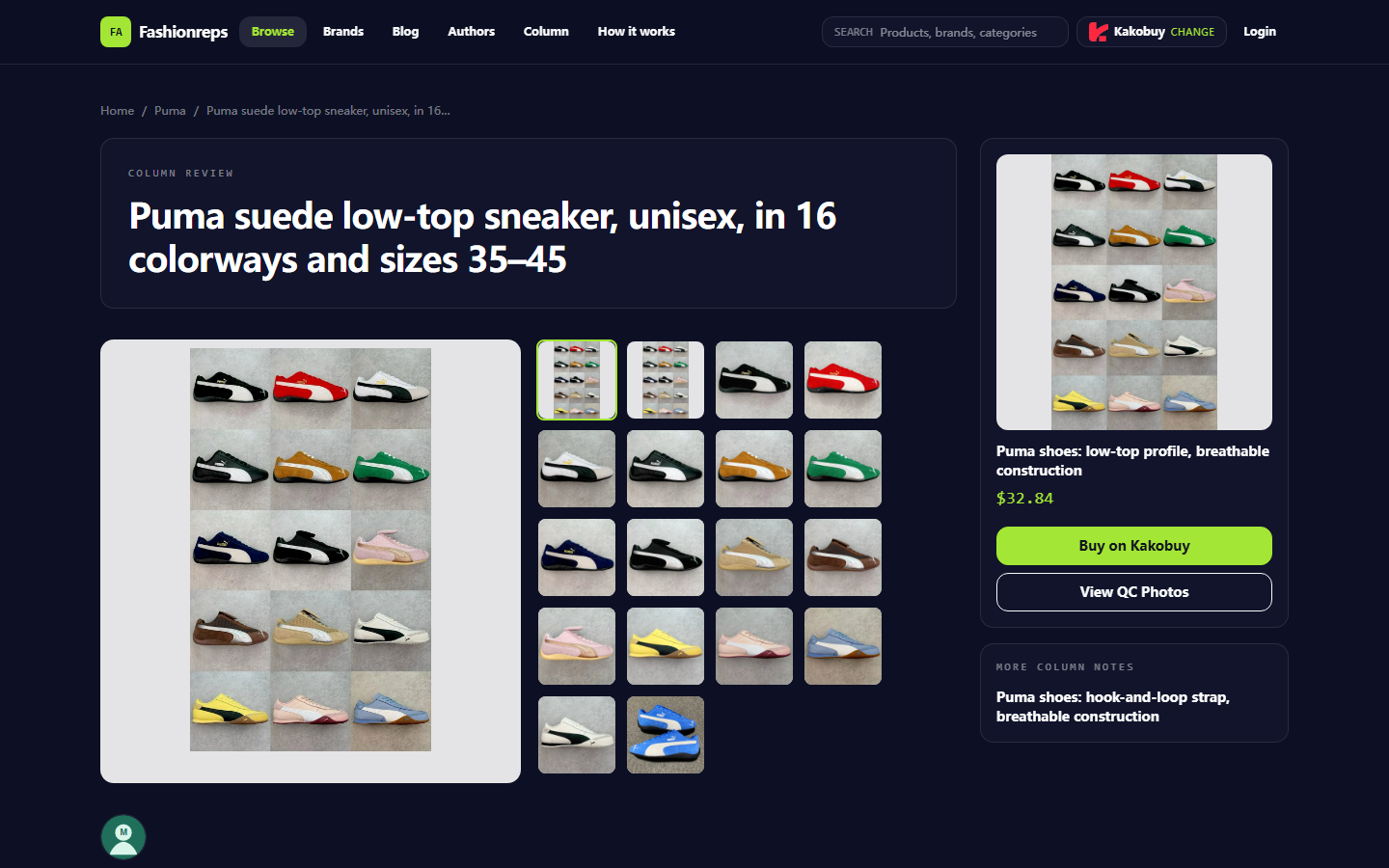
This guide is for buyers planning to check Puma low-top sneakers on fashionreps. It focuses on three practical issues: whether the product page info is enough to judge sizing, what upper and structure details the photos can show, and whether the shoes are better for commuting, daily walking, or light activity. After reading, you can do a documented pre-order check. If you need rain protection, intense long-duration sports, or clear long-term durability data, this method doesn't apply.
Page info and prices should be based on the verification date. The product page visible info and edit records used in this article were updated on September 26, 2026; the reference price shown on the page was $32.84. The final product price, service fees, international shipping, taxes, and route restrictions need to be reconfirmed on your chosen shopping agent's page. This article doesn't treat the page description as actual try-on, receipt, or durability test results.

Clarify the puma Sneaker Purchase Task and Evidence Boundaries
The current product page shows low-top lace-up shoes. The page info says they're unisex, with 16 colorways, sizes 35 to 45, and half sizes from 36.5 to 42.5. The page also lists two upper constructions and mentions suede or nubuck, sheepskin lining, PU insole, rubber outsole, and cemented construction.
This info helps narrow choices but doesn't directly prove actual foot feel, real durability years, rain performance, or that every colorway is identical. Key points from the page: wide feet should go up half a size; darker suede is less prone to showing dust; light-colored midsoles get dirty more easily; red colorways may be more pink than pictured. These are visible clues from the product page and related buyer feedback. Still, check QC photos of the specific colorway before ordering.
🔎 Evidence should be in three layers:
- Page facts: sizes, number of colorways, material descriptions, reference price, and publicly listed style info.
- Editorial judgment: inferred suitability based on last shape, toe room, upper stitching, and outsole shape.
- Not yet confirmed: real feel, long-term wear, workmanship consistency per pair, actual color difference, and smell after receipt.
Check Shoe Model, Color, Size, and Visible Specs on the fashionreps Product Page
Don't just look at the brand name or main image. Record the specific shoe model, colorway, size, page update time, and reference price shown. If the same page includes different constructions or colorways, don't assume all options share the same last, upper material, and color performance.
Product page info can be organized into this verification table:
| Item | Visible info on page | Still need to confirm before ordering |
|---|---|---|
| Shoe model | Low-top, round toe, lace-up; page lists two constructions | Last and upper details for your specific choice |
| Size | 35 to 45, half sizes in some ranges | Correlation of foot length, width, instep height with specific size |
| Upper | Page says suede or nubuck, plus some smooth leather and embroidery options | Actual upper used for target colorway, and whether suede direction is even |
| Sole | Rubber outsole, page describes cemented construction | Tread pattern, edge bonding, and specific QC workmanship |
| Price | Page reference price $32.84 | Service fees, international shipping, taxes, and final agent quote |
| Colorways | Page shows 16 colorways | Color difference from photos, especially red and light combos |
The page price isn't the final cost. Shopping agent, shipping route, package weight, volumetric weight, insurance, taxes, and destination country rules can all change the final cost. Don't judge cheapness based on one reference price, and don't commit to a fixed budget before confirming routes and taxes.
Determine What Extra Size Info You Need from Last, Toe Room, and Collar Structure
Size judgment should start with foot length and width, not the shoe name. Trace both feet on paper, stand and measure heel to longest toe, then measure the widest part of the forefoot. Use the larger foot as reference and note the sock thickness you'll wear.
📏 Page info and buyer feedback aren't consistent on sizing: for wide feet or between sizes, the advice to go up half a size repeats; but narrow-foot buyers have mixed feedback on classic low-tops—some say snug, some loose, some large. The page also says wide feet should go up half a size, so don't treat "everyone goes up half a size" as a reliable rule.
Follow this order:
- If your forefoot is wide or your foot length is between sizes, first ask if the specific colorway has half sizes, and list going up half a size as a pending option.
- If your foot is narrow, check insole length, collar snugness after lacing, and target shoe model instead of blindly following wide-foot advice.
- If your instep is high, focus on the lacing area, tongue length, and collar opening for pressure.
- If you wear thick socks or plan to add insoles, allow extra room; don't choose by barefoot length only.
- If the seller or agent can't provide measured insole length for the target colorway, mark size as uncertain rather than guessing from main image proportions.
The last only indicates space tendency, not actual comfort. Page info says the Suede XL style is described by some buyers as narrow and long; classic low-tops have had opposite feedback: tight, snug, and large. For those needing long standing, prone to foot wear, or requiring precise fit, buy cautiously without specific measured data.
What Upper Stitching, Overlays, and Outsole Structure Can Support
Upper structure helps judge maintenance difficulty and daily suitability, but you can't assert leather grade or durability years from photos alone. When viewing product page and QC photos, check these areas:
- Toe suede for obvious direction differences, uneven color patches, or creases.
- Formstrip overlay edges for straightness, and left/right symmetry.
- Upper stitching for skipped stitches, exposed glue, fraying, or inconsistent stitch length.
- Tongue edges for neatness, and whether inner seams might contact instep or ankle.
- Sole edges for separation, excess glue, or midsole color inconsistency.
- Collar height, lace hole positions, and heel shape roughly consistent between left and right.
👟 Relevant buyer feedback lists maintenance difficulty as the main con of these suede shoes: dust and stains are hard to deal with, drying is slow after wet, moisture may affect upper shape; some also report light midsoles get dirty easily. Long-term wear feedback suggests the flat rubber outsole may wear faster than the upper, but this isn't a lifespan guarantee for every pair.
Black or darker colorways generally hide dust better, but that doesn't mean no color bleeding. Feedback says some dark colorways may transfer dye to white trim after light rain. If you frequently encounter rain, mud, or need low-maintenance shoes, factor in suede cleaning and moisture protection costs.
Distinguish Suitability by Commuting, Daily Walking, and Light Activity
These low-top, flat rubber outsole shoes fit casual daily and commuting scenarios more than sports requiring professional support, cushioning, or slip resistance. Suitability can be divided as:
- Commuting: If your route is smooth surfaces, moderate walking distance, and mostly indoor activities, the low-top style and color options are easy to match with daily outfits.
- Daily walking: Consider, but first confirm the last fits your forefoot width, and accept that suede needs maintenance and light midsoles get dirty.
- Light activity: For short, low-intensity activities, they can work as casual shoes, but the page lacks cushioning, support, traction, or durability data needed for professional sports.
- Rainy and humid environments: Not recommended as primary rain shoes. Feedback repeatedly mentions cleaning and deformation risks of suede when wet.
- Long-duration frequent walking: If you walk a lot daily, treat the feedback about flat outsole wearing quickly as a risk, not just the upper look.
This isn't an absolute "can or can't wear" conclusion, but scenario matching. Want a low-top with clear colors for daily matching? Continue verifying. Need all-weather, waterproof, professional sports, or multi-season intense use? Look for other products with clear tech specs and after-sales support.
Record Product Page Photos, QC Photos, and Community Feedback Separately
Three types of materials serve different purposes; don't mix them:
- Product page photos: confirm style, colorway, silhouette, and structural info shown.
- QC photos: confirm the specific order being shipped matches expectations on upper, sole, logos, left/right symmetry, and obvious flaws.
- Community feedback: spot repeated risks like wide-foot sizing, suede maintenance, color deviation, inner seam irritation, and outsole wear.
QC photos aren't performance test reports and don't prove real wear testing. After receiving warehouse photos, check toe, side, heel, tongue, sole, and lining one by one. If photos are blurry, lack angles, or the colorway doesn't match your order, ask the agent to retake or confirm before packing. Don't pack with insufficient evidence.
If photos will be shown publicly, cover addresses, phone numbers, order numbers, payment info, and other personal data. Public captions should describe only what's visible, not write product photo observations as if you've touched materials or done wear tests.
Separate Page Facts, Editorial Judgments, and Unconfirmable Feel and Durability
The key to judging if a shoe is worth buying isn't hiding uncertainty but writing it clearly. Current info supports: the page offers multiple colorways and a wide size range; repeated advice to go up half a size for wide or in-between feet; suede may require higher cleaning and moisture protection; light midsoles and some dark colorways have maintenance risks; and there's no independent data on outsole long-term wear for this specific product.
Conclusions not directly supported: all colorways share the same last; all buyers must go up half a size; the upper is definitely a certain leather grade; the sole will last a certain number of years; a colorway will look exactly like the screen; the shoes are suitable for running, ball sports, or long hikes.
✅ Before ordering, record info in three columns: confirmed, needs supplement, cannot confirm. Only proceed to packing or shipping after the target colorway, size, QC photos, and final cost all meet your standards.
puma Pre-Order Verification Checklist and Next Steps
Before ordering, complete these checks:
- Record specific shoe model, colorway, size, and page verification date.
- Measure both feet: length, forefoot width, and sock thickness you'll wear.
- For wide feet or between sizes, ask if the target colorway has half sizes and verify measured insole length.
- Check QC photos of toe, side, tongue, heel, and sole.
- Focus on Formstrip edges, upper stitching, inner seams, sole glue, and left/right symmetry.
- Decide to accept or reject suede cleaning, rain use, light midsole dirt, and dark color bleeding risks.
- Reconfirm on the agent's page: product price, service fees, international shipping, taxes, insurance, and route restrictions.
- Confirm return/exchange or after-sales windows and what to do if you find size issues or obvious flaws.
- Save page screenshots, QC photos, and verification records, but don't publicly share order info with personal data.
Final advice: If you need shoes for sunny-day commuting and regular daily wear, value color options, and are willing to handle suede maintenance, continue with specific size and QC verification. If you often use them in rain, need professional sports performance, want low maintenance, or can't accept uncertain outsole durability and color bleeding risks, don't order based only on the product page main image.
This choice may save selection time and some comparison cost, at the price of bearing size uncertainty, cleaning maintenance, color deviation, and long-term wear risks. It suits buyers willing to check photos, measure feet, and accept the casual daily positioning; not for those needing clear performance certification, stable after-sales, or all-weather use guarantees.