 By Clara WinslowChocolate, confectionery trends, sensory evaluation
Nike SB Dunk Low Sizing Conflicts? Check These Facts
If you're preparing to buy the Nike SB Dunk Low shown on the page, the first thing to figure out isn't whether to go half a size up or true to size, but whether there's enough sizing evidence for this specific shoe. Public feedback on the Otomo Katsuhiro x Nike SB Dunk Low (FF0918-013) is inconsistent: some say you need to go half a size up, while oth
- Published
- Updated
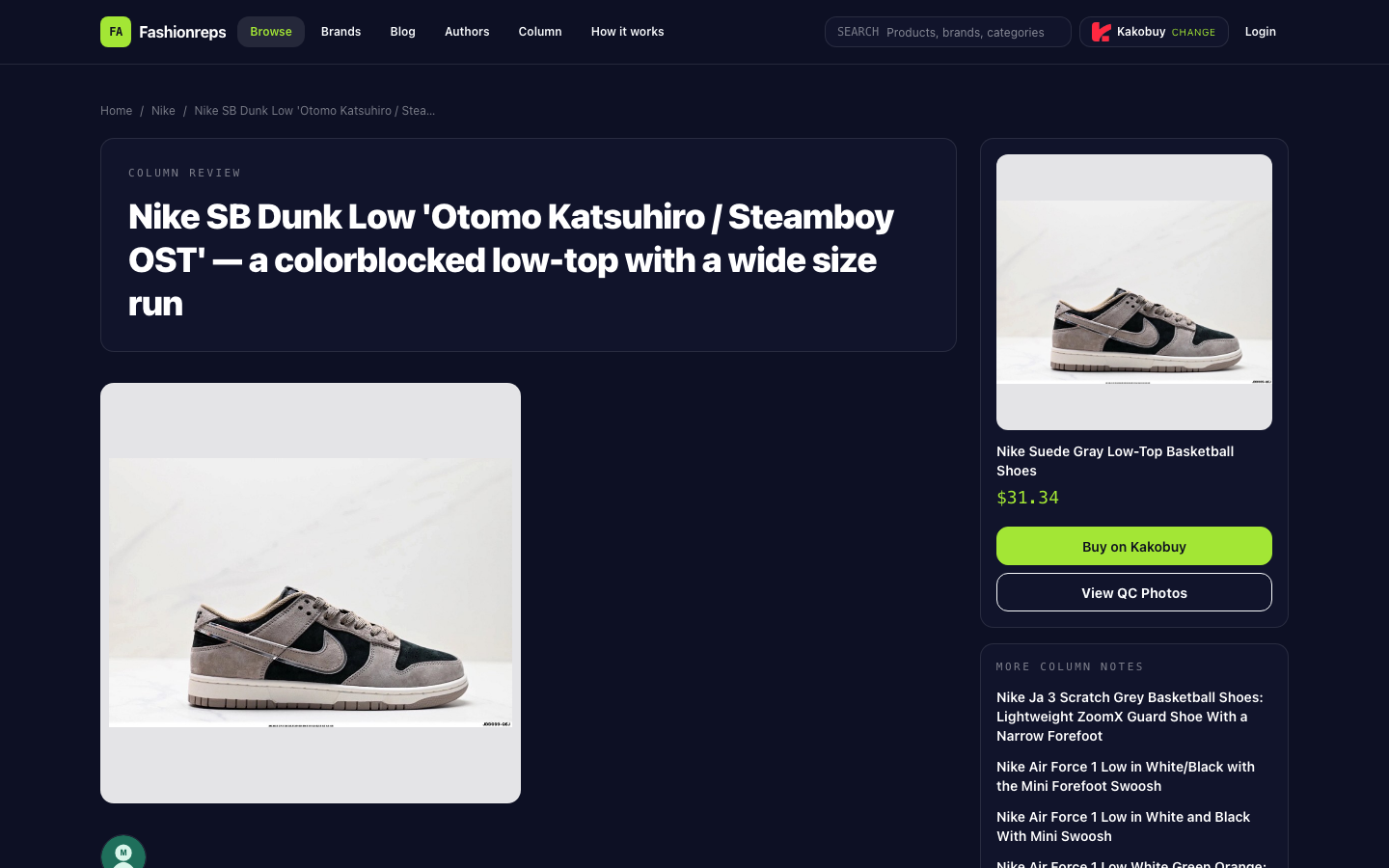

If you're preparing to buy the Nike SB Dunk Low shown on the page, the first thing to figure out isn't whether to go half a size up or true to size, but whether there's enough sizing evidence for this specific shoe. Public feedback on the Otomo Katsuhiro x Nike SB Dunk Low (FF0918-013) is inconsistent: some say you need to go half a size up, while others find their regular size works. So you can't rely on the shoe's name or general experience to make a reliable decision.
This article is based only on the page specifications, public feedback, and the visible QC entry point. I'm not claiming to have worn the shoe, measured it myself, or independently verified the insole length. The page itself also notes that the catalog information still needs further verification.
First, Confirm Which Shoe You're Dealing With
The page describes this shoe as an SB Dunk Low with Otomo Katsuhiro / Steamboy OST colorway elements, model number FF0918-013. Public feedback most often mentions the color blocking and suede appearance, not athletic performance. The page also describes it as having a thicker tongue and thicker Zoom insole in the SB low-top construction. These features affect internal space but can't be directly converted into an exact size for any individual.
The sizing information also needs verification. The page shows two different size ranges in different places: about 35–45 and 36–46. This inconsistency means the displayed data isn't fully reliable. These ranges shouldn't be taken as a stock guarantee, nor do they prove every size is currently available. Before ordering, you should ask the seller to confirm whether your specific size exists and follow the seller's response for that particular batch.
Why Public Sizing Opinions Conflict
The SB Dunk Low's thicker tongue, extra padding, and thicker insole can make the internal fit feel different from a regular low-top. Community opinions gathered on the page lean toward suggesting wide-foot buyers consider going half a size up; but some wearers find true to size works. For this Otomo Katsuhiro shoe, public feedback also shows both outcomes, with at least one buyer saying they needed to go half a size up for a better fit.
This means "always go half a size up in SB Dunk Lows" is not a conclusion this page can prove. A more accurate take: wide-foot buyers, those sensitive to pressure on the upper, or those planning to wear thick socks should treat half size up as an option to verify. People with normal-width feet who have previously worn SB Dunk Lows in their regular size with good fit can keep true to size as a pending option, but they still shouldn't skip checking actual measurements.
Pre-Purchase Decision Based on Foot Type
| Your Situation | Initial Direction to Consider | Evidence You Must Get Before Ordering |
|---|---|---|
| Wide feet or wide forefoot | Put half size up on your candidate list | Insole length, forefoot width, and seller confirmation of specific size |
| Normal feet, previously fit true to size in SB Dunk Lows | True to size can be a candidate | Same model or batch insole length, in-shoe photos, and size availability |
| Very sensitive to shoe length, toe pressure, or tightness | Don't immediately choose between true and half up | Actual insole length, outsole length, upper height, or inner space photos |
| Buying based only on regular Dunk experience | Don't directly apply regular Dunk conclusions | Specific measurements for this SB construction and seller replies |
The directions in the table are just a checking order, not a fit guarantee. In particular, insole length and outsole length can't replace each other: a longer outsole doesn't mean the effective internal space increases by the same proportion.
What Size Evidence to Request from the Seller
Before paying, it's best to limit questions to the specific size and batch. Don't just ask "Is this shoe true to size?" Instead, you can ask the seller to confirm the following in order:
- Whether your intended size is actually available, not just shown as an option in the dropdown.
- The insole length of that size, preferably with a photo showing a ruler.
- Whether the insole is the original one, and if there are different batches or versions.
- The total outsole length, plus a full photo from toe to heel.
- Visible photos of the inner forefoot, upper, and tongue padding to help judge if the thicker construction might compress space.
- If you're torn between true to size and half up, ask the seller to provide measurements for both sizes, not just a verbal suggestion.
After receiving photos, check that the ruler starts from zero, the shoe isn't obviously stretched, and the measurement is indeed for the correct size. If the image doesn't confirm the size tag, or the seller just repeats "buy your usual size," that's still not sufficient evidence.
What the QC Entry Can and Cannot Solve
The page provides an entry to view QC Photos by style. Visible QC is mainly for checking color blocking, suede surface, stitching, shoe shape, and obvious flaws. It cannot replace insole length measurement, nor prove wearing comfort. Even if the external photos show no obvious problems, you can't infer that true to size or half up will definitely fit.
In public feedback, some comments rate the materials of this shoe highly and say the suede feels nice; another buyer feedback about a related Comme des Garçons x Otomo Katsuhiro SB mentions a good shoe shape and no obvious flaws. These can help you understand the page's appearance and material reviews, but they aren't fit tests for that specific size, nor can they replace actual size evidence for this model.
When You Should Pause Before Ordering
If any of the following occurs, it's better to pause rather than guess your size:
- The size ranges shown on the page are inconsistent, and the seller can't confirm your specific size.
- The seller can't provide insole length, or the photo can't confirm the corresponding size.
- You have wide feet or are sensitive to upper height, but the seller only gives a vague answer like "normal size."
- You need exact shoe length, but only have external QC photos with no insole or inner measurements.
- The item condition, final item price, service fee, or international shipping hasn't been confirmed on the shopping agent page.
The page shows a reference price of 31.34 USD, and another spot shows 34.78 USD. The final item price, service fee, and international shipping are subject to the shopping agent website's checkout page; don't treat the reference price as the final cost. This article also doesn't judge stock or after-sales results based on that.
The Most Reliable Checking Order
First, record your foot length, forefoot width, and usual sock thickness, then set true to size and half up as two candidates. Then ask the seller for insole lengths and photos of both sizes, and confirm that the size range shown on the page matches the actually available sizes. Finally, use QC photos to check appearance, not to work backward to determine sizing.
If the seller provides specific measurements, wide-foot buyers can focus on comparing forefoot space and insole length; normal-foot buyers should compare the data to the insole length of shoes that already fit them well. If there's only generic sizing advice and no verifiable measurements, the most honest conclusion is still that you can't make a reliable choice between true to size and half up.
The page evidence for this Nike SB Dunk Low is better suited to support a "verify first, then decide" purchase process. It can help you spot risks like thicker construction, conflicting size ranges, and inconsistent public feedback, but it can't turn mixed opinions into a definite sizing answer.