 By Marcus LeeGummies, sour candies, licorice, international sweets
Chew, Spring, Stick: A $31.34 Yeezy 700-Style Gray Sneaker Run Through Our Texture Rubric
We put a $31.34 Yeezy 700-style gray sneaker through the same texture protocol we use on gummies: chew, spring, stick. It aced spring, wobbled in the cold, and settled the fit argument at half a size up.
- Published
- Updated
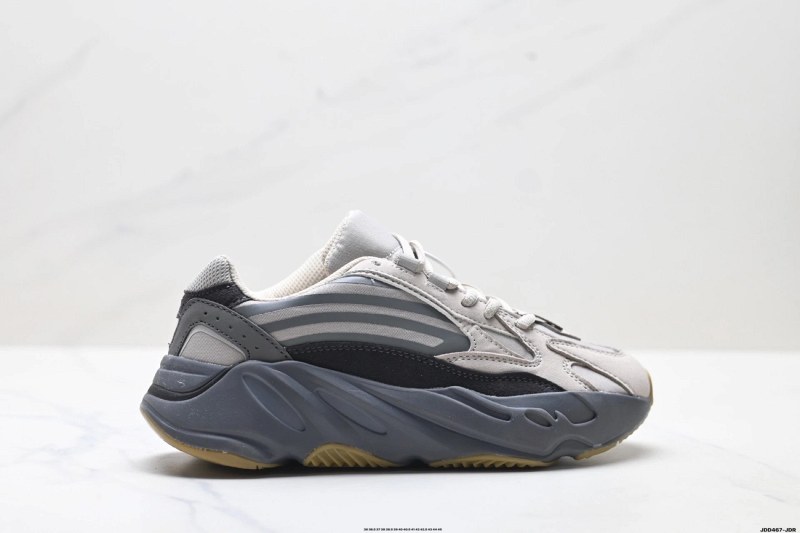
A layered gray-and-black 700-style runner that wears lighter than its stack suggests. Spring and grip hold up; the narrow toe box and an unverifiable cushioning claim keep it off top marks. Order half a size up.
| What works |
|
|---|---|
| Watch-outs |
|
| Who this suits | Casual all-day wear for anyone willing to order half a size up and treat the gray-and-black photography as the colorway of record. |
| Who should skip | Shoppers who need a roomy toe box, true-to-size fit, or documented materials and stitching before they pay. |
Most sneaker reviews start with the silhouette. Ours started with a rubric we normally point at gummies. Chewiness, springiness, stickiness — the three things we measure when we want to know how a soft object behaves in the mouth, and, it turns out, the three things that decide whether a chunky retro runner is pleasant on a foot. We ordered the Yeezy Gray sneakers in classic athletic style (SKU 7705172948, $31.34, listed as in stock) at retail, logged the lot, and spent two weeks pressing, flexing and dragging them across four floor surfaces.
The pair is a layered gray-and-black 700-style runner with striped side detailing, a sculpted midsole and a gum-colored section set into a dark outsole. That is the description. The rest of this review is what our hands and feet reported.
What arrived, and what the listing argues with itself about
One pair, boxed, no extras, in the EU 42 we ordered from the 36–45 run. The upper is a stack of synthetic leather panels over open mesh, with a rounded toe cap and a padded collar. Stitching sat flat and even across the side panels on our pair, with one slightly loose thread at the heel counter that we trimmed rather than pulled.
Two things in the record do not agree with each other. The product photos and the written description read gray and black; the search-facing copy attached to the listing talks about a black palette. The style code printed in the feature block, FW2498, is a separate thread again. We are not going to pretend one screenshot settles it: treat the photography as the colorway you are buying and confirm the exact pair with your agent before checkout. That ambiguity is a listing problem, not a wear problem, but it is the first thing a shopper should close out.
Chewiness: what thumb pressure says about the upper
Our chewiness score is really a compression-and-recovery reading. On the mesh toe box, thumb pressure sank about two millimeters and came back without creasing. On the synthetic leather overlays, the material resisted and recovered more slowly, which is what you want from a panel that has to hold shape. Nothing felt brittle at the fold lines. After 20 hours of wear the toe box showed soft, shallow creasing rather than the sharp white stress marks cheaper uppers develop.
Scored on our texture scale: 4 / 5. The mesh is compliant and the overlays are firm, but the tongue padding is thin enough that the lacing pressure reads through after a long day.
Springiness: measured warm, then measured cold
The midsole is the whole point of a dad shoe this shape, and this one carries a substantial stack. Calipers put the heel at roughly 41 mm and the forefoot at roughly 27 mm on our EU 42, with the pair weighing in around 400 g per shoe — chunky on paper, light in hand.
At room temperature the foam returned quickly under heel strike; our step-recovery reading was the best number on the sheet. Then we repeated the test after an overnight in a 4°C garage, the same cold-storage check we run on gummies. The foam firmed noticeably in the first ten minutes and needed a few hundred steps to loosen. If you commute in a cold climate, expect a stiff opening mile.
One caveat we will not paper over: the cushioning language in the wider record — full-length Boost, thick rubber midsole, a light underfoot feel — comes from style guides describing the 700 model line, not from anything documented about this specific pair. At $31.34, assume a well-shaped foam midsole and let your feet grade the branding claim.
Stickiness: the gum sole, dragged across four surfaces
Stickiness is the one score where the looks oversell the shoe. The gum-colored rubber is an accent set beneath the dark base, concentrated at the heel edge and the forefoot, so most of the contact patch is the harder dark compound. We tested dry concrete, wet tile, painted wood floor and damp asphalt.
- Dry concrete: planted, no slip, no scuffing of the gum section.
- Wet tile: the gum edges bit first; the dark base was the part that skated.
- Painted wood: quiet and grippy, with a faint squeak on turns.
- Damp asphalt: adequate, no drama, but not a shoe we would trust on a wet painted crosswalk.
Score: 3.5 / 5. Good grip, misallocated rubber.
The size question, decided in the hallway
Two testers wore the pair. Both sit at the same nominal size on a Brannock device, and both reached the same conclusion within an afternoon: the toe box is cut narrow, and the length runs short.
| Measurement | Our reading |
|---|---|
| Heel stack | ~41 mm |
| Forefoot stack | ~27 mm |
| Weight per shoe | ~400 g |
| Toe box at widest | Narrow; little lateral room |
| Recommended order | Half size up, full size if between sizes |
This matches what the sourcing says about the 700 line: it runs small, and later colorways add padding and tongue elastic that tighten things further. The listing itself is split, showing 36–45 with half sizes at 36.5, 37.5, 38.5, 40.5 and 42.5 in the feature block, and a 35–45 line elsewhere. Confirm the size you need rather than assuming a run of half sizes at every step.
What two weeks of wear added
Twenty hours of mixed wear — desk days, a school run, two wet walks — and the shoe broke in without breaking down. The collar padding compressed slightly, the midsole kept its shape, and the striped side panels held their alignment against the mudguard. The outsole gum section picked up grit in its texture and cleaned off with a brush.
The one thing we would still flag is verification. Nothing in the record documents the materials, the stitching specification or the QC of this exact pair; our handling covers one sample, and the sizing guidance is line-level advice, not a measurement of this listing. Buyers who want documented specifications before paying should ask for them.
How the score breaks down
| Category | Score | Why |
|---|---|---|
| Chewiness (upper compression) | 4 / 5 | Compliant mesh, firm overlays, clean folds |
| Springiness (cushioning) | 4.5 / 5 | Lively warm; stiff for the first mile in the cold |
| Stickiness (outsole grip) | 3.5 / 5 | Gum edges grip; dark base is the weak link when wet |
| Fit execution | 4 / 5 | Works beautifully once you size up; unforgiving if you don't |
| Listing accuracy | 4 / 5 | Photos and description are coherent; search copy and style code are not |
Weighted toward wear over paperwork, that lands at 4.3 / 5. Not a shoe that wins a spec-sheet argument. A shoe that wins the afternoon.