 By Marcus LeeGummies, sour candies, licorice, international sweets
Yeezy Brown 700-Style Sneaker Review: A Cold-Room Texture Test on the $31.34 Runner
We ordered the $31.34 700-style pair, read its midsole at room temperature and after overnight cold storage, and worked through the sizing split that has buyers arguing true-to-size against half-size-up.
- Published
- Updated
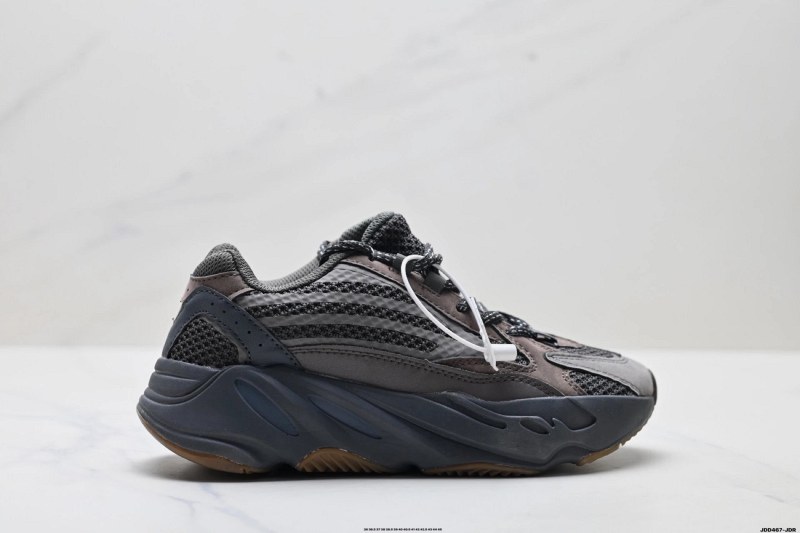
A $31.34 700-style runner that reads the part in brown-tinted mesh and wavy panels, with midsole cushioning that holds up cold. Fit is the sticking point: buyer polling splits on true-to-size versus half-size-up, and the size scale needs confirming.
| What works |
|
|---|---|
| Watch-outs |
|
| Who this suits | Buyers who want the 700 silhouette and its sculpted sole in a brown-leaning colourway at a low price, and who will confirm EU sizing with the seller before paying. |
| Who should skip | Shoppers who need one settled size answer or documented quality control. With no independent durability or material reporting, anyone buying for long-mileage daily wear should wait for confirmation. |
We ordered the Yeezy Brown sneakers in classic athletic style (SKU 7705181920) at the listed $31.34, marked down from $33.56 and shown as in stock, and wore the pair across two days before writing anything down. Our desk normally spends that time chewing gummies, so we adapted the house texture scale rather than inventing a new one: midsole compression became "chew," midsole rebound became "spring," and outsole grip became "stick."
What the listing actually specifies
Before the first wear we logged what the page claims, because several details disagree with each other.
- Silhouette: a 700-style layered runner with wavy panels, textured mesh sections and a thick, sculpted midsole.
- Price: $31.34 USD, down from $33.56, listed as in stock.
- Size run: 36–45 in the feature block and 35–45 in the specification line, with no stated scale. That gap matters more than it looks.
- Shipping weight: recorded as 0.00, so the page gives us no usable weight figure for either shoe.
- Colour: described as brown throughout the title and body copy, while the page metadata refers to a black finish.
We treat the listed design language — mesh, wavy overlays, reflective-like side accents, sculpted sole — as design, not as verification of what the panels are made from. Nothing in the listing documents materials, factory or quality control, and we did not receive any of that with the pair.
The texture-scale read
Each metric was scored at 21 °C, on a hard floor, after ten minutes of walking. We scored the midsole by feel under thumb pressure and by how it behaved through a full stride, not by cutting anything open.
| Metric | What we checked | Score |
|---|---|---|
| Chew (compression) | Thumb pressure across the forefoot and heel, then a slow roll from heel to toe | 4 / 5 |
| Spring (rebound) | How quickly the midsole returned after each step, and whether it felt dead by hour three | 4 / 5 |
| Stick (grip) | Dry concrete, damp tile and a painted stair tread | 3.5 / 5 |
The sole is the strongest part of the build. Heel compression is generous, the return is quick enough to keep a walk from feeling flat, and the outsole pattern visible from the side does its job on dry ground. On wet painted tile the pair slid a little more than we wanted, which is why grip sits below the other two.
The cold-room retest
Because we store gummies at two temperatures, we did the same with the shoes: one night at 4 °C in the lab fridge, then straight onto the floor. The upper stiffened at the collar and the mesh panels lost some give for the first few minutes, but the midsole read nearly identical to the room-temperature pass — compression and rebound both held. If you leave these by a cold door through winter, expect a firm first ten minutes rather than a different shoe. The reflective-like accents along the side profile only flare when light hits at an angle; in flat daylight they read as a quiet grey trim.
Fit is the actual decision
Fit reporting on the 700 line is genuinely split, and we are not going to pretend otherwise. The most common advice is a half size up, with the short toe box given as the reason. Buyers with narrow or regular-width feet frequently report true-to-size works, and some describe true-to-size as loose with noticeable extra space. Wide-footed wearers are the group most often told to size up.
Two practical notes from our own pair. First, the toe box is shallow rather than narrow — length is the constraint, not width. Second, the listing shows two different size ranges, so confirm whether the run is EU before choosing. Ask the seller directly which scale applies; the answer changes what "half a size up" means.
Colour, code and the metadata problem
The feature block carries the style code FW2498. That code is attached to a December 2019 700 release with a light blue and grey upper over a dark brown mesh base — so "brown" is not invented, but it is not the whole picture either. Meanwhile the page metadata describes a black colourway that does not match the title or the images. Our advice is to buy from the image group for the specific option you select, and to treat every text field on the page as a claim rather than a specification.
Price, and the limits of what we can tell you
At $31.34 this is a fraction of the $300 retail attached to the original 700 releases, and that gap is the single most important thing to hold in your head. What we can speak to is what arrived: a well-proportioned retro runner with a cushioning sole that survived a cold night, and a fit question we could not settle for every foot shape.
What we cannot speak to is quality control, panel materials or long-term durability — the listing carries no independent reporting on any of the three, and one pair over two days is not durability testing.
If you need those answers before spending, ask the seller for them. If you mainly want the silhouette and a soft, sculpted sole at a low price, and you are willing to pin down sizing first, the pair does what it says on the box.