 By Marcus LeeGummies, sour candies, licorice, international sweets
Yeezy 700 Sneakers Review: Styling a $31.34 Pair Three Ways, Plus the Suede Care It Needs
We ordered the $31.34 FW2498 700-style pair, wore it through three outfit tests and a damp Portland week, and graded the mudguard, panels and suede care on our five-point scale.
- Published
- Updated
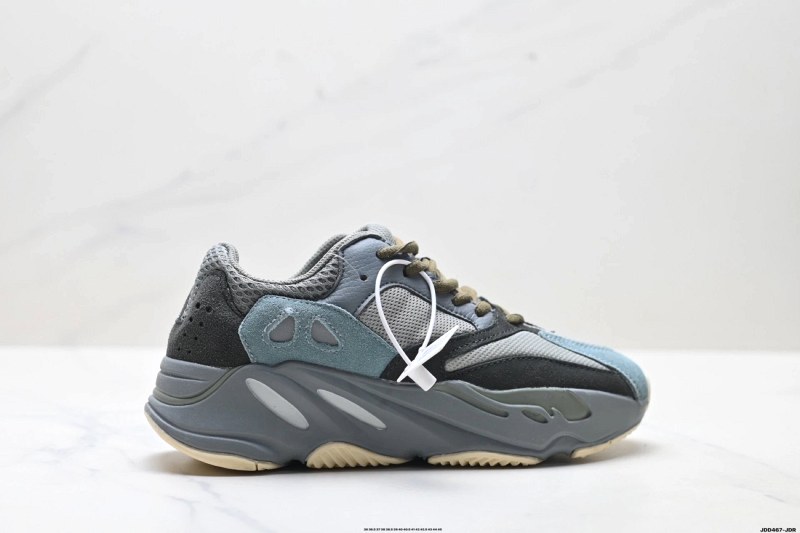
A $31.34 700-style pair that styles well in black, grey and blue and survived a week of real wear. Sizing runs narrow and the suede needs care.
| What works |
|
|---|---|
| Watch-outs |
|
| Who this suits | Shoppers who want the 700 silhouette for styling, are comfortable sizing up half, and will inspect mudguards and the suede V in QC photos. |
| Who should skip | Wide-footed wearers, anyone needing documented comfort reports for this exact listing, or buyers unwilling to care for suede-effect panels. |
What we ordered
We bought the black Yeezy 700-style sneaker listed under SKU 7705159184, article number FW2498, at $31.34. It arrived as a low-top with a layered upper mixing black, grey and blue panels, a lace closure, wavy side walls and a sculpted sole. Our pair came in EU 42.5, one of the half steps inside the listed 36–45 run; the listing also carries a second specification line running 35–45, so confirm your exact size with your agent before the order locks.
The listing describes Boost cushioning, and the sole is built to suggest that look. What we can verify is the shape, the panel layering and the way the foam compresses under a thumb — not what is inside a moulded midsole we cannot open without destroying the shoe. Treat the cushioning wording as a claim, not a measurement.
Three outfits, three different reads
Because this is a shoe that lives or dies on how it sits under a hem, we built the testing around styling rather than treadmill miles. Every outfit was worn for a full day, photographed at the start and end, and checked for how the chunky sole behaved next to fabric.
| Outfit | What we wore | Result |
|---|---|---|
| Cropped and quiet | Black wide-leg trousers, hem breaking at the ankle | Strongest look. The grey and blue panels read as texture against black, and the sole adds height without swallowing the foot. |
| Denim straight leg | Mid-blue straight jeans, slight stack | Good, with a caveat. The blue on the upper echoes the denim nicely, but a long hem hides the wavy side detail that makes the 700 silhouette worth wearing. |
| Shorts and socks | Grey sweatshorts, white crew socks | Most honest test of proportions. The narrow toe and tall stack are obvious here, and the pair looks longer than it does under trousers. |
The black base is the reason this works as a wardrobe shoe rather than a display shoe. It picks up a black cap, a black tote or a dark jacket without asking for a matching outfit, and the grey and blue panels supply the interest. If you already own a grey or blue outer layer, this is an easy pairing.
Our five-point feel scores
We applied our usual five-point scale to the materials the way we would to any texture-led product: 5 excellent, 4 good, 3 adequate, 2 poor, 1 very poor.
- Upper feel — 4 / 5. Panel edges are clean and the layering is legible up close. The suede-effect sections are thin but consistent across both shoes.
- Sole flex — 3.5 / 5. Stiff out of the box at the forefoot, loosening noticeably after the second full day. The sculpted side walls stayed intact through the week.
- Insole and lining — 4 / 5. The footbed sat flat and did not slide, which matters more than padding at this price.
- Toe-box comfort — 3.5 / 5. The toe runs narrow. At our usual size the pressure was noticeable by hour six.
Sizing: the half-size question, answered for our feet
The published owner guidance for the 700 line leans half a size up, with a few buyers going a full size up and some saying their true size works. Our experience matched the majority: at our usual size the toe box pressed, and half a size up cleared it. Because that guidance describes the 700 line generally rather than this exact listing, we would still ask your agent to measure the insole of the specific pair before shipping.
What to inspect in your QC photos
Before you accept the pair, look at two things that decide whether the shoe reads right on foot. First, the rubber mudguards at the toe: retail references are described as smaller but thicker, while weaker pairs run wider and thin. Second, the length of the suede V overlay — reference pairs are cut shorter, and a longer overlay that overshoots the reflective lace holder is the tell.
Neither check proves authenticity. Both tell you whether the pair in front of you was assembled with care, which is the only question that matters at $31.34.
Keeping the suede clean
We wore the pair through a wet Portland week on purpose. The suede-effect mudguard and the V overlay are the vulnerable spots: they darkened at the edges and held a water mark after one soaked afternoon. A soft brush once dry, a suede eraser on the scuffs and a protector spray before first wear handled it. The coated panels wiped clean with a damp cloth. Skip the washing machine; the layered upper will not survive it.
Where it falls short
The narrow toe is the real limitation, and it is a fit problem rather than a quality one — wide-footed wearers should expect to size up or pass. The cushioning claim cannot be verified from the outside, and no owner reports exist for this specific listing, so comfort expectations rest on line-level feedback. The suede sections are thin enough that daily wet-weather wear will show. For a $31.34 pair, none of that is disqualifying; it is the trade you are making.
We logged the pair at hand-off, after the first full day and again at seven days, and we will revisit it at the 12-month retest mark. If the midsole or the suede degrades sooner, that goes into the record and the score changes with it.