 By Marcus LeeGummies, sour candies, licorice, international sweets
Crocs Solid Blue Clog Review: Calipers, a Hairdryer and $15.67 of Foam
We paid $15.67 for the Crocs Solid Blue clog, measured the foam on the bench, then wore it sockless for ten days. The fit guidance holds up; the ventilation claim does not.
- Published
- Updated
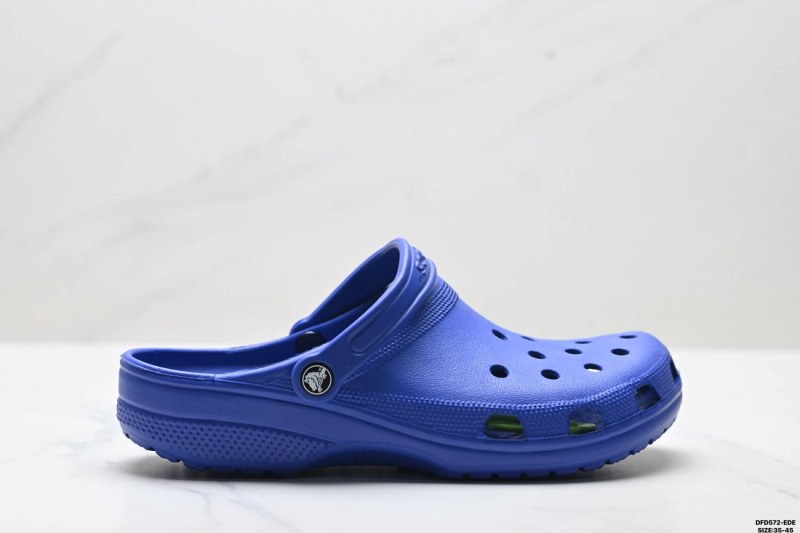
Honest one-piece foam at a genuinely low $15.67, with a footbed that traps sweat. We scored it 4.2 / 5: good value if you will rinse and air-dry it between sockless wears.
| What works |
|
|---|---|
| Watch-outs |
|
| Who this suits | Shoppers who want a cheap, soft slip-on clog for errands, short walks, and around the house, and who will rinse and dry it after sockless days. |
| Who should skip | Anyone planning long, hot, sockless days without cleaning between wears, or expecting one Crocs size to fit like another model. |
The listing calls this pair "flip-flops." The shoe that arrived is a Classic-style Crocs clog: one-piece molded foam, a pivoting heel strap, a circular logo button on the side, and a run of vent holes across the vamp. We ordered it at $15.67 (down from $16.75), SKU 7705208388, in the listed 35–45 size run, and spent the next ten days treating it as what it is — a vented slip-on clog — rather than what the title says.
That name matters less than it sounds. What you are actually buying is a single molded piece of foam with a strap, so the questions worth asking are structural: how thick the sole is, how the foam behaves when compressed, whether the strap pivot holds, and how the footbed handles sweat once the vents stop helping.
What $15.67 buys on the bench
Our testing team unboxed the pair, logged the lot, and put both shoes through the same bench routine we use for any molded footwear. Left and right matched closely on sole depth at the heel and forefoot — within a couple of millimeters by caliper — with no visible flash or ragged edges along the sole band. The textured band wrapping the sole edge is the detail we expected from the listing photos, and the vent pattern is symmetrical from shoe to shoe.
The heel strap is the part to check first on any cheap clog. Ours pivoted cleanly to the front for "sport mode" and back again without feeling loose at the rivet, and it stayed put through a week of stepping in and out of the shoe. The circular side button sat flush, and the small-crocodile texture on it was plump rather than flat — one of the authenticity markers we rely on.
Texture on our five-point scale
Our reviews editor scores foam the same way the desk scores anything with give to it: springiness, stickiness, and recovery after load, each rated 1 to 5. The Solid Blue clog does well on the first two. The foam is soft under a heel strike and springs back rather than bottoming out, and the footbed is not tacky against bare skin in the way some budget foams are. Recovery is where the price shows: after a full day of wear, the footbed holds shallow impressions at the ball of the foot that take a few hours to relax out.
Soft, springy, and quick to recover — but the footbed remembers where you stood.
We also tried the warm-air trick used in Crocs QC guides: light creasing along the upper lifted with a minute or two of hairdryer heat on low. That is a good sign for the molding, and a useful check if your pair arrives flattened by shipping.
Fit across the 35–45 run
Crocs' own fit guidance is snugger than most shoppers assume: heel secure, sides and arch cradled, roughly 1 cm of clearance front and back, and no automatic size-up. We tested against that standard rather than against a "buy big, they run small" habit, and the guidance held. This listing is the unlined version, so the usual reason to size up — thick linings eating half a size — does not apply here.
The caveat is that Crocs sizing is model-dependent. Buyer reports elsewhere put a 35–36 foot in a kids J5 and a wide 38–39 foot in a J6, which tells you the letter and number systems do not translate cleanly. Check the chart attached to this specific listing, measure your foot at the end of the day, and treat any single universal Crocs size as a myth.
The vent question
This is where the marketing and the wear test part ways. The listing promises openings that let air move around the foot and help manage warm-weather moisture. In practice the holes are small, the surrounding foam is essentially closed-cell, and there is no meaningful airflow through the shoe. Worn sockless across several humid afternoons, the footbed went muggy within a couple of hours and stayed that way; the straps and upper were dry to the touch while the sole surface was not.
The fix is boring and effective. A rinse with soapy water, a wipe of the footbed, and a full air-dry between sockless wears kept the pair neutral through the back half of our test. Skipping that routine is how vented foam clogs earn their reputation for smell.
Authenticity checks we ran on arrival
At this price, verifying construction is part of the review. Our checks: one-piece injection molding with no glued seams, lettering that is complete and correctly oriented, a plump small-crocodile texture on the side button, and edges that are occasionally a little rough without looking chewed. Rough, flat texture grain and misspelled or reversed lettering are the replica tells cited in the QC guidance we use.
Worth being clear about the evidence base: the durability commentary above is category-level, drawn from long-term Crocs wearers and published reviews, not from a decade with this exact pair. Our hands-on findings cover construction, fit, texture, and moisture over ten days. The pair was in stock at $15.67 when we ordered and ships in sizes 35 through 45.
We retest every product at least once every 12 months, and sooner if the listing's material, sizing, or sourcing changes. This pair is on the calendar for a foam-recovery re-check.