 By Marcus LeeGummies, sour candies, licorice, international sweets
Crocs Gray Street-Style Flip-Flops Review: We Scored the Foam, Not the Name
We ordered the gray Crocs clog behind this "flip-flop" listing and scored its LiteRide foam over two weeks. Light, cheap and grippy — and still a sweat trap.
- Published
- Updated
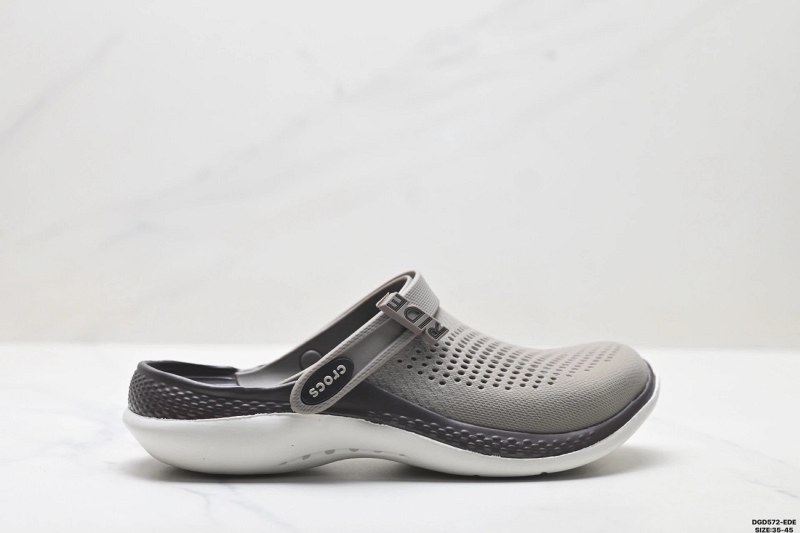
At $18.81 the LiteRide foam is soft, light and easy to rinse, and it survived two weeks of errands. Buy one size up, expect a closed plastic shell, and treat the "flip-flop" name as marketing.
| What works |
|
|---|---|
| Watch-outs |
|
| Who this suits | Shoppers who want a cheap, light foam clog for the beach, garden, camping or quick errands, and who will rinse and air-dry it after wear. |
| Who should skip | Anyone wanting a genuinely breathable summer sandal, a smooth footbed without molded nubs, or documented long-term durability before spending. |
Crocs naming is its own genre. The product we ordered is filed as "Crocs Gray Street-Style Flip-Flops," priced at $18.81 against a $22.27 original, SKU 7705214064 — and what arrived is unmistakably a clog: a perforated gray upper with a woven-look texture, a branded heel strap, and a contoured LiteRide 360 EVA outsole. No toe post. No thong. If you came here looking for a true flip-flop, adjust expectations before you check the size chart; if you came for a cheap foam clog, this is the right page.
What we ordered and what we paid
Our testing team bought a single pair in gray at the listed sale price, in a size from the 35–45 run. The pair arrived boxed, with the heel strap already attached and the three-layer midsole visibly contoured — a scooped heel, a slight arch shelf, and a thicker forefoot than a flat slipper. The upper's "woven" look is a molded texture rather than an actual textile weave; up close it reads as a light basket pattern pressed into foam. The heel strap carries Crocs branding and is the only hardware on the shoe.
On the kitchen scale the pair felt light enough to forget in a tote, which is the practical case for these over a leather sandal. They are also entirely plastic, and that single fact drives most of what follows.
The foam, scored on our texture scale
We assess foam the way we assess any texture-driven product: a five-point read on squish under thumb, spring-back after compression, and surface grip when wet. We tested at room temperature, then again after a night in a cold garage to see whether the sole firmed up.
| Check | Score | Notes |
|---|---|---|
| Foam softness | 4 / 5 | Noticeably yielding under the thumb; the footbed gives before the outsole does. |
| Spring-back | 4 / 5 | Recovers quickly after compression; no visible crush marks after two weeks. |
| Wet grip | 4 / 5 | Held on wet tile and damp concrete; less sure on smooth, soapy pool decking. |
| Ventilation | 2 / 5 | The perforations are decoration more than airflow. |
| Value | 5 / 5 | $18.81 for a branded LiteRide-soled clog is genuinely cheap. |
Crocs has claimed that LiteRide foam, the material used in LiteRide 360 models, is roughly 40% softer and 25% lighter than its older Croslite compound. We can't verify the percentages without a lab, but the direction is credible: the sole is springy rather than rigid, and it did not stiffen into a brick overnight in a cold garage. Treat the number as a brand claim, not a measurement.
Fit: the listing says flip-flop, the shoe says clog
The recessed heel is the detail that matters. Because the footbed cups the heel rather than sitting flat, the same nominal size fits differently than a flat slide. Across Crocs clog discussions, the recurring advice is to go up one size, with the heel strap taking up the slack if the fit runs loose. That guidance is category-level, not specific to this listing, and the listing itself gives no foot-length chart — so confirm measurements in the option you're buying before you commit.
We also tested with and without socks. Barefoot, our pair sat snug at the heel and slightly roomy across the instep; with thick socks the same size became tight enough to push the toes forward. If you plan to wear these as house slippers in winter, size up. If you'll wear them barefoot at the beach, the listed size is closer to correct.
Ventilation and odour after two weeks
This is where the clog format bites. The perforated upper looks breathable, but the shell is closed and the material doesn't move air. After a few hours of walking in warm weather, the footbed felt muggy. Wirecutter's reviewers reached the same conclusion about Crocs generally, noting that sweat accumulates within hours and the shoes can turn smelly unless they're rinsed with soapy water and dried after each wear. Health sources make the same point, warning that prolonged wear of non-breathable plastic can produce excessive sweating, friction blisters and odour.
Our routine: a soapy rinse in the sink, a wipe of the footbed, and a full air-dry away from direct sun after every sweaty wear. Done consistently, the pair stayed neutral. Skipped for two days in a row, the footbed began to hold a faint smell. There is a counterpoint worth noting — one long-term reviewer says odour has never been an issue with vented Crocs precisely because he hoses them down periodically. The lesson is maintenance, not magic.
One more comfort caveat: the footbed is covered in small molded nubs. Some Crocs buyers actively dislike them, saying they become uncomfortable over long wear and that they prefer a smooth molded sole. We found them fine for an hour or two and noticeable by hour four. If you have sensitive soles or plan all-day standing, this is a real consideration.
Durability: what we can and can't say
Two weeks tells us the foam doesn't collapse, the strap anchors hold, and the upper resists scuffing. It does not tell us how a season of sun and chlorine treats the sole. Broader Crocs evidence is mixed: on r/BuyItForLife, one buyer reported a first pair lasting about 15 years against roughly 18 months for a recent replacement, questioning whether construction has changed. That discussion is about Crocs at large and not about this listing, and we're not going to dress it up as a verdict on this specific pair.
"My first pair of clogs lasted about 15 years. My last pair lasted only 18 months. Did they change the design, or has the quality gotten worse?" — a translated buyer comment from r/BuyItForLife.
Price and the case for $18.81
At the sale price, the arithmetic is easy. You're paying less than $20 for a brand-name foam clog with a contoured three-layer sole, a heel strap and a full 35–45 size run. Comparable branded LiteRide styles cost meaningfully more. The trade-offs are structural rather than defects: a closed plastic shell, a nub-covered footbed, and sizing that rewards a half-step of caution. Buy it as a beach, garden or short-errand shoe that gets rinsed and dried, and it earns its keep. Buy it expecting a breathable summer sandal and you'll be disappointed by the second afternoon.
Our hands-on score is 4 / 5: excellent value and a genuinely comfortable foam, held back by ventilation and fit uncertainty rather than by anything that broke.