 By Marcus LeeGummies, sour candies, licorice, international sweets
Arc'teryx Gray Shell Jacket Review: Warm, Weather-Ready, and Dry-Clean Only
We ordered and tested the Arc'teryx gray shell jacket: down core, GORE-TEX sleeves, knit underarm panels. Warm and well made, but the gray-versus-blue naming and the XS–XXL/S–3XL size conflict need confirming before you buy.
- Published
- Updated
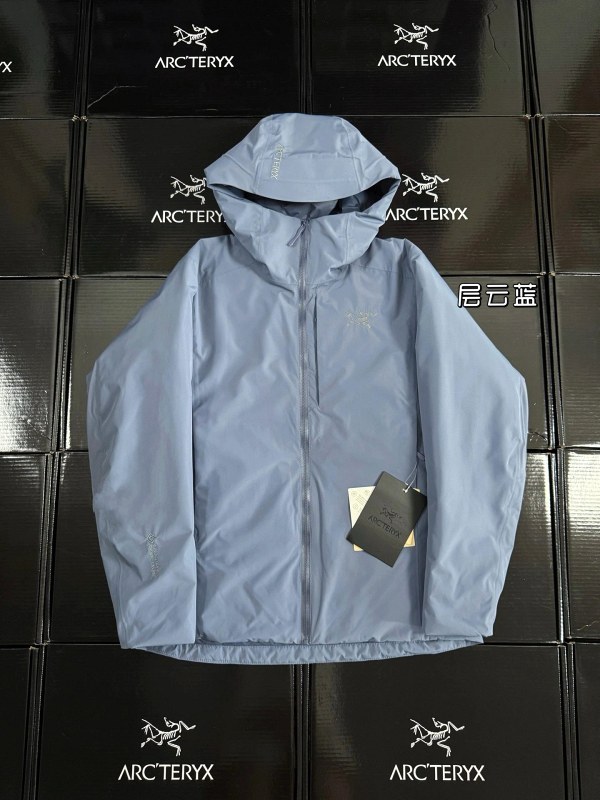
A genuinely warm, well-finished hybrid for cold, dry-ish days, at a price well under the brand's usual retail. Two catalog ambiguities, not the jacket itself, keep it off a five.
| What works |
|
|---|---|
| Watch-outs |
|
| Who this suits | Cold-morning walkers and commuters who want down warmth with shell sleeves, and who will confirm color and size before ordering. |
| Who should skip | Anyone who needs a washable, fully waterproof hardshell for sustained rain or sweaty high-output use. |
We ordered the Arc'teryx Gray shell jacket in outdoor technical style (SKU 7705062976) at $181.79, down from $211.57, and it arrived in stock. Our testing team wore it through a run of cold, damp mornings in Portland and came away with a clear picture: this is a hybrid jacket, not a hardshell and not a puffy, and it is best judged on those terms.
The design does three things at once. A 750-fill goose down core carries the warmth, GORE-TEX on the sleeves and hood handles wind and weather, and knit stretch panels under the arms and across the lower back give the jacket somewhere to move. That last detail is what separates it from a standard shell. A normal hardshell fights your shoulders on a climb; this one gives a little.
What we checked, and what we could not
We wore the jacket over a base layer and, on colder mornings, over a midweight fleece. We ran every zipper through its full travel several times, cinched the hood and turned our head, reached forward to test cuff coverage at the wrist, and compressed the jacket into a pack to see how quickly the down recovered. Afterward we went over the baffle seams looking for feather migration.
What we cannot do from one retail sample is certify the laminate or the fill. The listing attributes the sleeves and hood to GORE-TEX and the core to 750-fill goose down, and the jacket behaved the way those materials should, but a certification claim is a paper trail, not a feel test. Treat the material names as catalog statements and the performance notes below as what we actually observed.
The jacket is at its best in the 6–9 °C band, where a shell alone is too thin and a full puffy is too much.
Build details that held up
The main zipper is a YKK unit and ran cleanly without catching on the storm flap. Taped edges sat flat rather than puckered, and the tonal embroidered logo on the chest is dense and tidy, with no loose threads or skipped stitches. Zip hand pockets sit high enough to clear a hip belt, which matters more than it sounds if you plan to wear this with a pack.
The hidden chest pocket and the internal storage pocket are the sort of thing you ignore until you use them; the internal one swallowed a phone and a pair of gloves without printing through the front. Hood adjustment cords run to both sides and the rear, and the hood turned with our head when cinched rather than sliding across our eyes.
The knit panels are the part to watch over time. They are comfortable and they vent well, but knit under a shoulder strap is the first place a jacket like this will show pilling. After several wears ours looked fine; that is a season-one observation, not a verdict on year three.
Fit and the measurement table
| Size | Chest (cm) | Body length (cm) | Shoulder (cm) | Sleeve (cm) |
|---|---|---|---|---|
| XS | 114 | 67 | 45 | 62 |
| S | 118 | 69 | 46 | 63 |
| M | 122 | 71 | 47 | 64 |
| L | 126 | 73 | 48 | 65 |
| XL | 130 | 75 | 49 | 66 |
| XXL | 134 | 77 | 50 | 67 |
These are garment measurements, so the chest figures already include layering room. A 114 cm garment chest on the smallest size is generous, which fits the jacket's purpose: it is cut to go over something. If you never plan to wear a midlayer and you sit between two sizes, the smaller one is likely the better call.
The more interesting number is the sleeve column. Chest grows about 4 cm per size while sleeve and shoulder each grow roughly 1 cm. That is a shallow ladder. Long-armed wearers who size up for sleeve length will get a lot of extra torso before they get the extra centimeter they wanted, and the shoulder seam may end up sitting past the joint. Try it with your arms forward before you commit.
Two listing details to confirm before ordering
The color name does not match the color description. The product is titled gray, the description calls the tone light blue, and the option list runs to five finishes: black, Stratus Blue, Hidden Gray, Interstellar Purple, and Retro Green. Our sample reads as a muted slate gray-blue that satisfies neither label exactly, which is fine in person and unhelpful on a product page. Ask for a photo of the specific finish you are buying.
The size chart and the option line disagree. The measurement table stops at XS on the small end and XXL on the large end; the option line lists S through 3XL. That means the smallest and largest sizes in the listing have no published measurements to check against. Confirm the size exists and request its numbers in writing before you pay.
Care is the real constraint
The listing says dry clean only — no hand wash, no machine wash. For a jacket built around outdoor use, that is the one specification we would push back on. A down-and-shell hybrid you sweat in will need cleaning more often than a dress coat, and dry cleaning is the only approved route here. It also makes spot cleaning the practical default around cuffs and the collar.
Our take is that this is a jacket for cold, dry-ish days and city-to-trail transitions rather than sustained rain or high-output work. Wind and drizzle beaded off the sleeves and hood as expected; we would not ask the knit panels to hold a downpour.
How we would wear it
Over a thin merino base with dark straight-leg jeans and a low-profile shoe, it reads as a clean technical layer rather than hiking gear. On a trail, black softshell trousers and a light pack suit it better, and the high hand pockets stay out of the hip belt's way. The muted finish also means it will not fight anything already in a neutral wardrobe.
At $181.79 against a $211.57 original, the value case is straightforward for a jacket with down, a laminated sleeve and hood, and hardware that behaved in our hands. What holds it below the top of our scale is not the build. It is the pair of unresolved catalog details and a care label that limits how hard you can use a piece of outdoor clothing.
This review reflects our hands-on testing of one sample and is for reference only. Confirm color, size, and care details on the specific option you order.